
Wound care is a critical part of healthcare, especially for those dealing with chronic or complex wounds. As of 2024-2025, chronic wounds represent a significant and growing burden in Canada, particularly within home and community care settings in Ontario. Among them, the Waterloo Wellington Integrated Wound Care Collaborative (WWIWCC) stands out as a leader, setting new standards with advanced tools and methods.
But wound care doesn’t just involve physical healing. Addressing mental and emotional factors is also crucial for recovery. Stress, in particular, can significantly impact wound healing outcomes, making it an important area of focus.
Current clinical practice increasingly recognizes that wound healing outcomes are influenced not only by local wound management, but also by broader patient factors such as nutrition, mobility, mental health, and access to timely follow-up care.
Digital Leisure and Responsible Online Entertainment (Contextual Note)
In Ontario’s regulated digital environment, adults engage with a wide range of online entertainment options, including streaming services, games, and other interactive platforms. Regulated online gambling operates separately within this ecosystem under the oversight of the Alcohol and Gaming Commission of Ontario (AGCO) and iGaming Ontario.
As of 2025, Ontario’s iGaming framework emphasizes player protection measures such as deposit limits, cooling-off periods, and the planned rollout of a centralized self-exclusion system. These safeguards are designed to reduce harm and ensure that gambling remains a regulated form of entertainment rather than a health intervention.
Online Gambling as Regulated Digital Entertainment in Ontario (Contextual Reference)
Contextual note (2025):
Discussions of online gambling in this section reflect how some adults describe their personal leisure habits in Ontario’s regulated digital entertainment environment. This reference does not represent medical advice, clinical guidance, or a recommended strategy for managing stress during wound recovery. Healthcare professionals continue to emphasize evidence-based approaches such as psychological support, social connection, and structured mental health care where appropriate.
Managing stress is a crucial part of wound recovery, and online gambling is one of several regulated digital entertainment activities that some adults choose to engage with in their free time. Many find that trusted platforms for real-money play, supported by validated research on the best online casinos Ontario has to offer, help create moments of relaxation. These reviews and list give players clear and trustworthy advice, making it easier to choose safe and reliable platforms. They highlight key details like game options, secure payment methods, and helpful customer support, ensuring players can enjoy a stress-free experience.
From a regulatory perspective, online gambling in Ontario operates under strict oversight by the Alcohol and Gaming Commission of Ontario (AGCO) and iGaming Ontario. As of 2025, licensed platforms are required to provide responsible gambling tools, including player-set limits, cooling-off periods, and access to self-exclusion programs. These safeguards are intended to reduce harm and ensure gambling remains a regulated form of entertainment rather than a health or therapeutic activity.
As we explore the growing need for advanced wound care, we see how programs like WWIWCC provide holistic solutions for better recovery outcomes.
Growing Need for Advanced Wound Care
Recent Canadian estimates indicate that wound care accounts for billions of dollars annually in healthcare spending, with a substantial proportion of this burden occurring in home and community care. In Ontario alone, millions of nursing visits each year are related to wound management, and approximately one-third of home care patients are living with acute or chronic wounds.
In response, regional wound care programs increasingly prioritize:
- Early identification of non-healing wounds
- Standardized assessment tools
- Technology-enabled monitoring
- Coordination between hospital, community, and long-term care providers
What Makes WWIWCC Unique?
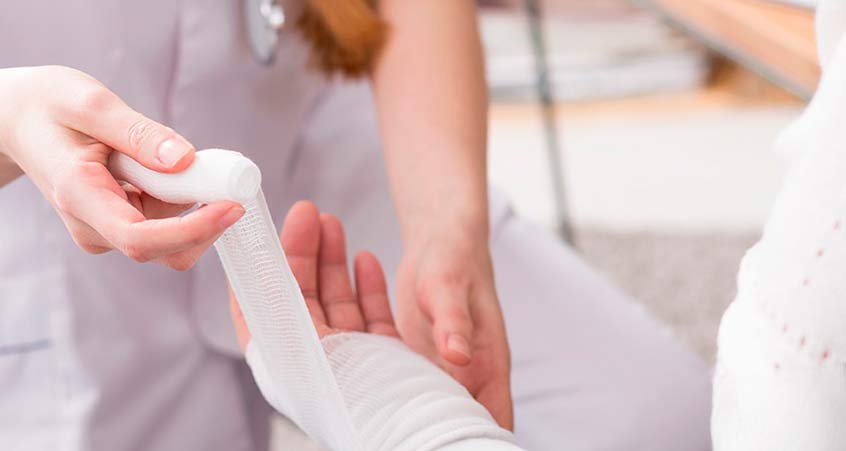
WWIWCC integrates evidence-based practices for various wound types, including acute, chronic, and surgical wounds. Its structure reflects broader 2025 system trends favouring shared care pathways, standardized documentation, and cross-sector coordination rather than isolated clinic-based treatment.
Innovative Tools and Techniques
iFUN Criteria
WWIWCC employs the iFUN criteria as a guideline for referrals to advanced wound care specialists. It ensures timely intervention by focusing on:
- Intervention: Identifying the need for advanced tests like ABPI or debridement.
- Frequency: Tracking frequent dressing changes.
- Unknown: Investigating unknown causes of non-healing wounds.
- Number: Monitoring wounds that fail to show improvement.
Criteria-based referral systems align with current Ontario best-practice guidance aimed at reducing delays and unnecessary escalation of care.
Bates-Jensen Wound Assessment Tool (BWAT)
BWAT provides a structured and standardized approach to evaluating wounds. By assessing factors such as wound size, depth, edges, and exudate type, clinicians can make informed decisions to optimize care. Standardized assessment tools such as BWAT remain widely used across Ontario in 2025 to support clinical decision-making and longitudinal tracking.
Swift Skin and Wound App
One of WWIWCC’s standout tools, the Swift Skin and Wound App. As of 2024-2025, this type of platform is commonly used within Ontario home and community care programs to support:
- Medical-grade wound imaging
- AI-assisted measurement and progression tracking
- Remote consultation with wound specialists
- Automated documentation uploads to electronic medical records
These tools function as clinical decision-support systems, not autonomous diagnostic technologies.
Tubigrip Compression and ABPI Testing
Compression therapy, such as Tubigrip, helps manage vascular swelling, while ABPI testing ensures the safe use of compression by assessing blood flow. These interventions remain standard components of vascular wound management protocols in Ontario.
Addressing Patient-Specific Factors
WWIWCC goes beyond wound care by addressing factors that can impact healing:
- Geriatric Depression Assessment Tools: The Geriatric Depression Scale (GDS), developed by Sherry A. Greenberg, PhD(c), MSN, GNP-BC, helps screen for depression in elderly patients. This depression screening tool for elderly patients integrates mental health care into wound management strategies, improving recovery outcomes.
- Mini Nutritional Assessment (MNA): Identifies nutritional deficits that may delay wound healing.
Integrating these assessments reflects current recognition that wound healing is closely linked to overall health status rather than local wound care alone.
Management of Wound Challenges
WWIWCC takes a comprehensive approach to managing wound-specific challenges:
- Brawny Edema: Defined as non-pitting, firm swelling caused by chronic inflammation or poor circulation. WWIWCC uses compression therapies like Tubigrip to address this issue and enhance circulation.
- Indurated Wounds: Addresses hardened wound edges that often signal complications.
- Periwound Care: Focuses on maintaining healthy skin around the wound.
- Dependent Rubor and Skin Shearing: Preventing and managing redness caused by poor circulation and damage from friction or pressure.
Management strategies align with province-wide best practices emphasizing prevention, early intervention, and skin integrity preservation.
Structured Care Pathways
WWIWCC provides structured pathways for managing specific wounds, such as:
- Diabetic Foot Ulcers (DFUs): Utilizing tools like Total Contact Casting (TCC) and Aircast Walking Systems for effective management.
- Pressure Injuries and Vascular Ulcers: Implementing tailored interventions to prevent and treat these wounds.
Pathway-based care models are increasingly favoured in Ontario to improve consistency and outcomes across diverse care settings. WWIWCC monitors progress with metrics like wound size reduction, frequency of dressing changes, and patient satisfaction. Its data-driven approach often results in faster healing times and fewer complications compared to traditional programs.
Traditional Wound Care Programs
Wound Care Program at St. Joseph’s Health Centre
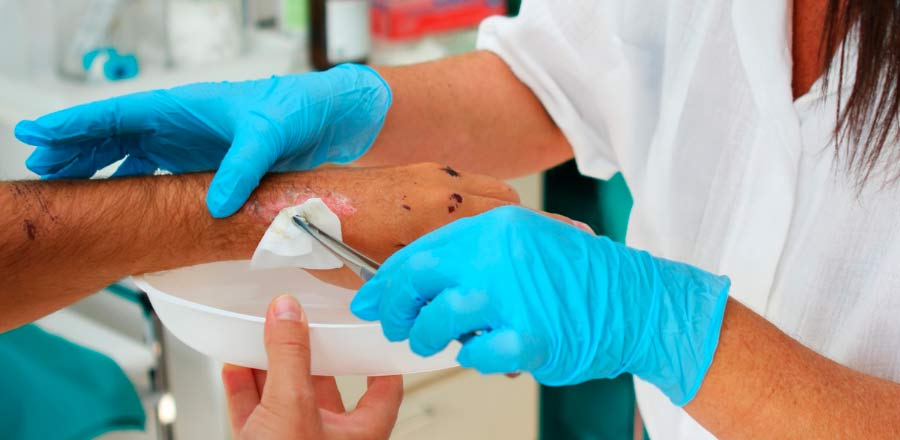
St. Joseph’s collaborates with dermatologists and specialized nurses to care for acute and chronic wounds. Like many hospital-based services, its model reflects a more centralized approach, with more limited integration of remote monitoring and regional digital coordination compared to newer collaborative frameworks.
Key Tools and Practices:
- Relies on traditional techniques like physical examination of wound edges and rolled wound edges management, with limited integration of AI-based diagnostics.
Central East Area Ontario Health atHome Wound Care Program
This program coordinates care across community providers and hospitals for wounds like pressure injuries and DFUs. As of 2025, these programs increasingly incorporate virtual wound consultations, digital imaging, and standardized referral processes, reflecting a province-wide shift toward technology-enabled care delivery.
Tools and Technology:
- Utilizes the Swift Skin and Wound App for virtual consultations, though with less integration than WWIWCC.
- Focuses on ABPI testing and compression therapies like pressure gradient hose for vascular wounds.
Comparing WWIWCC with Traditional Programs
| Feature | WWIWCC | St. Joseph’s Health Centre | Central East Ontario Health atHome |
|---|---|---|---|
| Service Model | Integrated regional collaboration | Hospital-based clinic | Integrated home and community care |
| Core Focus | Development of coordinated evidence-based pathways | Direct wound treatment and prevention | Technology-enabled integrated care |
| Key Partners |
|
|
|
| Unique Features |
|
|
|
| Access | Regional network of providers | Single clinic location Limited clinic hours compared to regionally coordinated programs | Home-based and clinic options 24/7 digital platform |
| Assessment Tools |
|
|
|
| Care Delivery | Coordinated care across multiple settings | Clinic-based treatment | Hybrid model (virtual + in-person) |
| Referral System | Integrated healthcare provider network | Through Ontario Health atHome, hospitals, and primary care providers | Clear criteria-based system with hotline |
| Documentation | Paper and electronic records | Traditional clinical records | Automated digital documentation |
| Strengths |
|
|
|
| Areas for Growth |
|
|
|
Note: Community Care Access Centres (CCACs) were dissolved as part of Ontario’s health system restructuring. As of 2025, home and community wound care services are coordinated through Ontario Health atHome.
Why WWIWCC Sets the Standard
- Holistic Care: Combines advanced technology, psychological assessments, and nutritional support for comprehensive care.
- Efficiency: Tools like the Swift App and iFUN criteria lead to faster healing times.
- Collaboration: Strong partnerships with hospitals, community providers, and long-term care facilities ensure seamless care transitions.
While multiple Ontario programs continue to deliver effective wound care, collaborative and digitally supported models such as WWIWCC illustrate the broader system direction toward integrated, community-based wound management.